
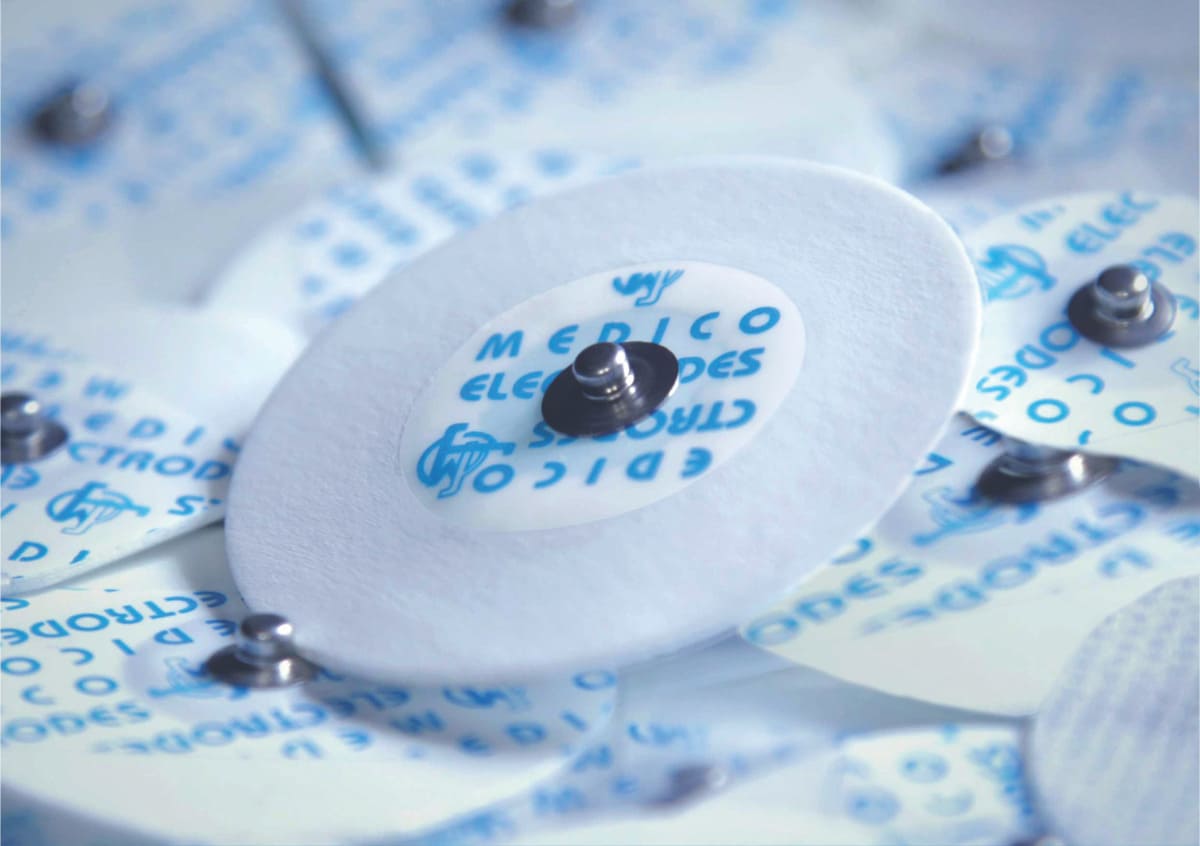
When it comes to cardiac care, precision is not a luxury, it’s a necessity. Whether, in an emergency room, or an ICU, or a routine diagnostic set-up, accurate cardiac monitoring directly influences patient outcomes. But here’s the challenge – many facilities still struggle with inconsistent ECG signals, false alarms and even adhesive failures, not because of complex equipment – but due to a set of underperforming ECG electrodes and ECG gel.
Sounds familiar? Well, if your team has ever dealt with unclear signals or device-patient mismatch, you’re likely facing an issue that’s far more common than you think — and completely preventable. Let’s get to the details of it all –
Why must you get the basics right in cardiac monitoring?
Every heartbeat generates a signal – and the cardiac monitors detect and analyse these signals in order to – identify arrhythmias, ischemic changes, or cardiac arrest triggers. But, if for some reason, the data received is inaccurate whether due to poor adhesion, noise, or even due to high impedance, the diagnosis becomes unreliable and the therapy may be delayed.
That’s why the smallest components in your cardiac monitoring system often carry the heaviest of the loads. Without high-quality ECG electrodes, even the most advanced cardiac monitors fail to perform effectively.
What makes ECG electrodes so critical?
For the unversed, the ECG electrodes are far more than mere disposable patches. They are, specifically engineered medical devices, that are designed to act as a high-fidelity interface between – the skin and the monitoring system. They convert ionic currents on the skin into readable electrical signals.
What sets a good electrode apart?
- Reliable signal acquisition
Especially during movement or long-duration wear.
- Skin-friendly adhesion
Prevents irritation or detachment.
- Biocompatibility
Reduces allergic reactions and skin breakdown.
Whether you are monitoring for 5 minutes or 48 hours – electrode performances define clarity of your data and ultimately the diagnosis.
And here’s the surprising twist – not all ECG electrodes are built for the same purpose.
Are you using the correct type of electrodes?
Different types of electrodes are used on the basis of specific ECG procedures –
- Resting ECG electrodes: Designed for standard 12-lead ECGs performed on patients at rest. These electrodes, use a wet gel and superior silver/silver chloride (Ag/AgCl) technology to produce fast and clear traces.
- Stress and Holter testing electrodes: For situations involving patient movement. Electrodes use a strong adhesive and high-chloride wet gel to reduce motion artifacts and provide clear readings during exercise stress tests or 24-hour Holter monitoring.
- Long-term monitoring electrodes: Built for continuous monitoring in departments like the ICU or CCU. These feature low-chloride gel and hypoallergenic adhesives to minimize skin irritation over extended use.
- Emergency (EMS) electrodes: Used for quick, accurate readings when time is critical. These electrodes are designed with a large, aggressive adhesive and high-chloride gel for reliable performance in emergency services
Each of these variants demand – tailored materials, adhesive strength and conductivity properties. Choosing the wrong type not only compromises on the comfort, but also the clinical accuracy. The reality is – many procurement teams treat all the electrodes as the same – and that is a costly oversight.
Also Read: – Medico Electrodes: The Right Choice For ECG Manufacturing
Why do conductive gels matter?
An electrode is as good as the contact it makes with the skin! That contact is mediated by ECG gel, a conductive medium that minimizes resistance and improves signal quality.
So, precisely what is the function of such a gel? For the record, it reduces skin-electrode impedance, improves the amplitude of the signals and on the whole enhances patient comfort level. Without this, the electrical signals from the heart become distorted, leading to diagnostic errors and unreliable monitoring.
The high-quality conductive gels are primarily –
- Hypoallergenic and non-irritating
- Formulated to stay hydrated over time
- Engineered for optimal viscosity – neither too stiff nor too runny
In applications like Holter monitoring or long term ICU telemetry, gel stability directly impacts the consistency of the signals.
A quick note on the relationship between – gels and electrodes
Though there are some innovations that attempt to create ‘dry’ electrodes, most of the clinical grade systems still rely on the synergy between – electrodes and conductive gels. They are a pair – wherein removing one weakens the other.
When utilised together as designed, they are –
- Used to improve signal fidelity across all leads
- Minimize motion artifacts and false alarms
- Supports faster and more confident decision making at the point of care
Whether it’s a standard 12-lead ECG, or a high-risk defibrillation event, your ability to interpret the signal depends on how well your electrodes and gels work together.
What happens when these components fail?
To begin with – poor electrode adhesion can cause lead-off alarms. Inferior gels can result in flat lines or even noisy signals. These technical glitches lead to – misreads, delayed responses and a lot more!
For long-term monitoring, patient compliance drops when adhesives irritate or electrodes fall off! In critical care, this kind of failure is nothing short of disastrous!
Where is cardiac monitoring technology headed?
Now that you have clarity in regards to the essentiality of ECG gel and electrodes, at Medico Electrodes, let us give you an idea about wherein the cardiac monitoring technology is headed –
- Component manufacturers are now focused on – hydrogel electrodes that offer more moisture retention
- Skin safe adhesives are becoming the new ‘it’ thing – all thanks to the minimal residue that it offers
- Eco – conscious designs are being considered now – given that, since the demand for electrodes and gels are rising so – manufacturers must now balance clinical-grade performance with comfort, sustainability, and ease of use.
Key Takeaways
Effective cardiac monitoring isn’t about having the flashiest machine on the market — it’s about how well your core components perform.
By investing in high-quality ECG electrodes and ECG gel, you’re choosing: cleaner signal acquisition, safer patient experiences, faster clinical decisions, and reduced total cost of care. Being a trusted partner in the designing, development and scalable production of – disposable medical electrodes and hydrogels, our role at Medico Electrodes is to assist you in delivering reliable, patient-centred cardiac care – from hospital settings to personal domains.
Please Note: When the basics are strong – everything else performs better!